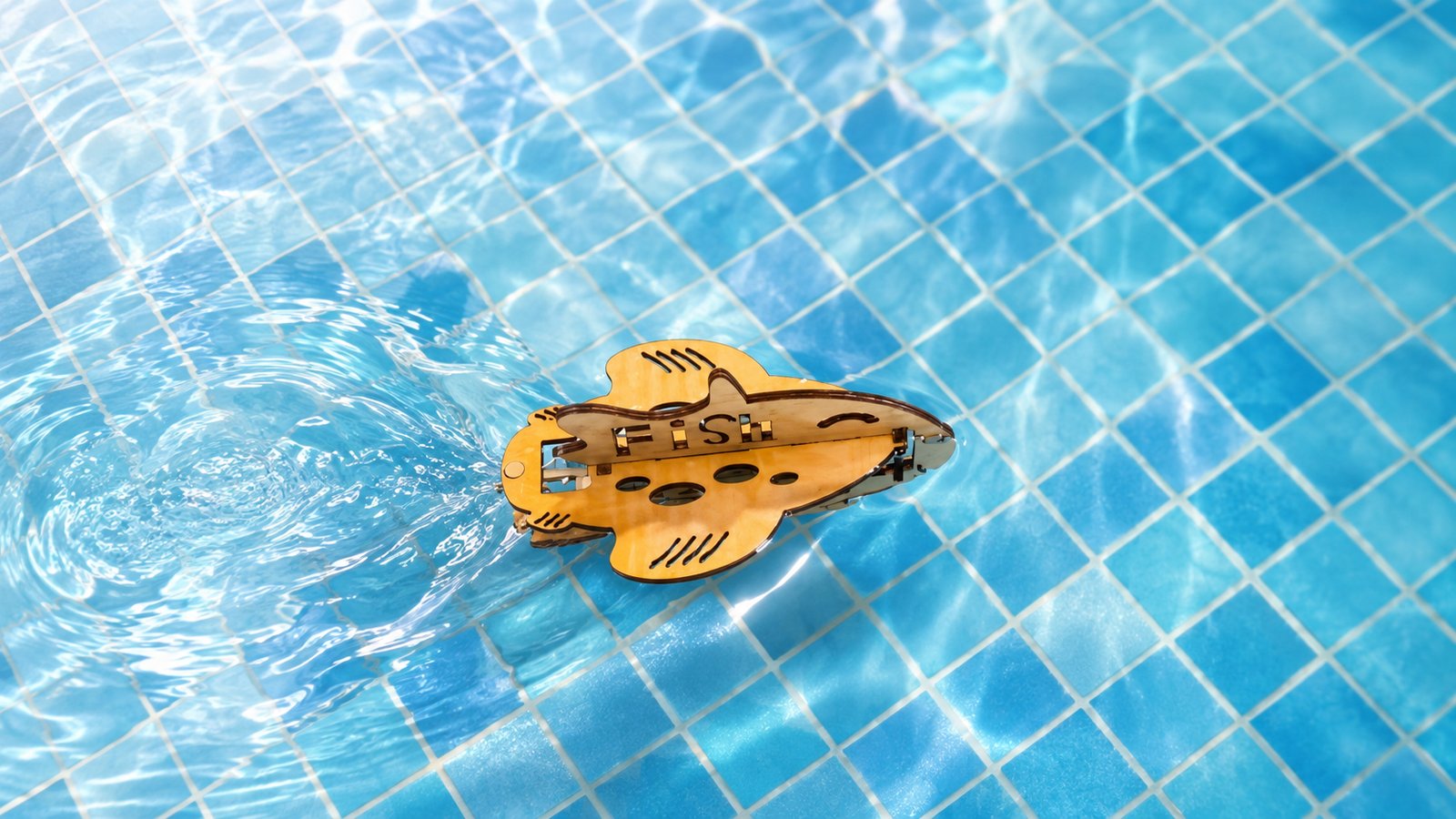
Motion made visibleA compact product with immediate visual impact.
L0 Mechanical
A beautifully simple way to understand how stored energy becomes movement in water.
Learners assemble a physical body, release the mechanism and watch linkage motion become tail oscillation and thrust—before code, sensors or abstraction enter the picture.
The Mechanical Fish makes four foundational ideas tangible without overwhelming the learner. Each idea is visible, testable and easy to discuss.
Elastic energy provides a clear and intuitive source of motion.
A compact linkage transforms release into repeated tail movement.
Oscillation interacts with water and produces visible forward motion.
Shell and tail geometry become part of a real experiment, not a diagram.
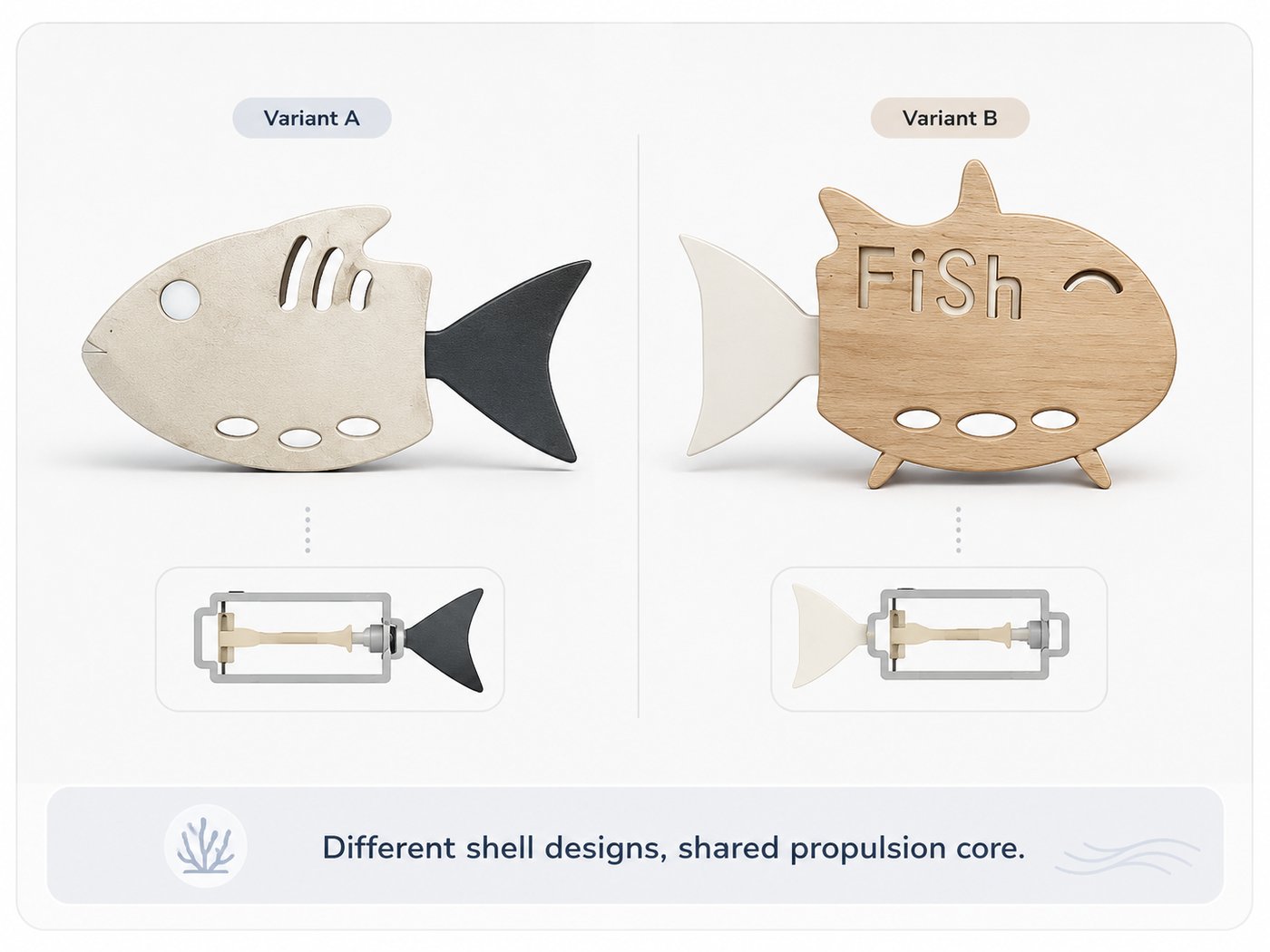
The product introduces a powerful engineering idea in a highly accessible format: the propulsion logic can remain understandable while the body and tail change around it.
This gives workshops and classrooms a natural way to discuss morphology, efficiency and design iteration.
Two short demonstrations show the product in water without allowing video to dominate the page. Each clip becomes a focused proof point rather than a full-screen interruption.
Families, museums, workshops and introductory STEM programs.
Energy storage, linkage motion, tail propulsion and morphology.
A tactile activity with a fast and memorable result.
Continue the pathway with RoboFish EDU, where motion becomes responsive robotic behavior.