L1 · Introductory robotic fish

RoboFish EDU

From seeing motion to building responsive behavior.

RoboFish EDU combines a protected core, controlled propulsion, sensing input and visible feedback in a compact platform created for memorable water-based robotics learning.

Protected coreVariable speedLight-sensitive responseRGB feedback
Status: A surface-swimming educational platform. Active ascent and descent belong to the future L3 product level.
Readable architectureA protected core keeps the system clean and teachable.
Sensor to behaviorInput, control and response can be observed together.
Designed to engageA sophisticated product language for introductory robotics.
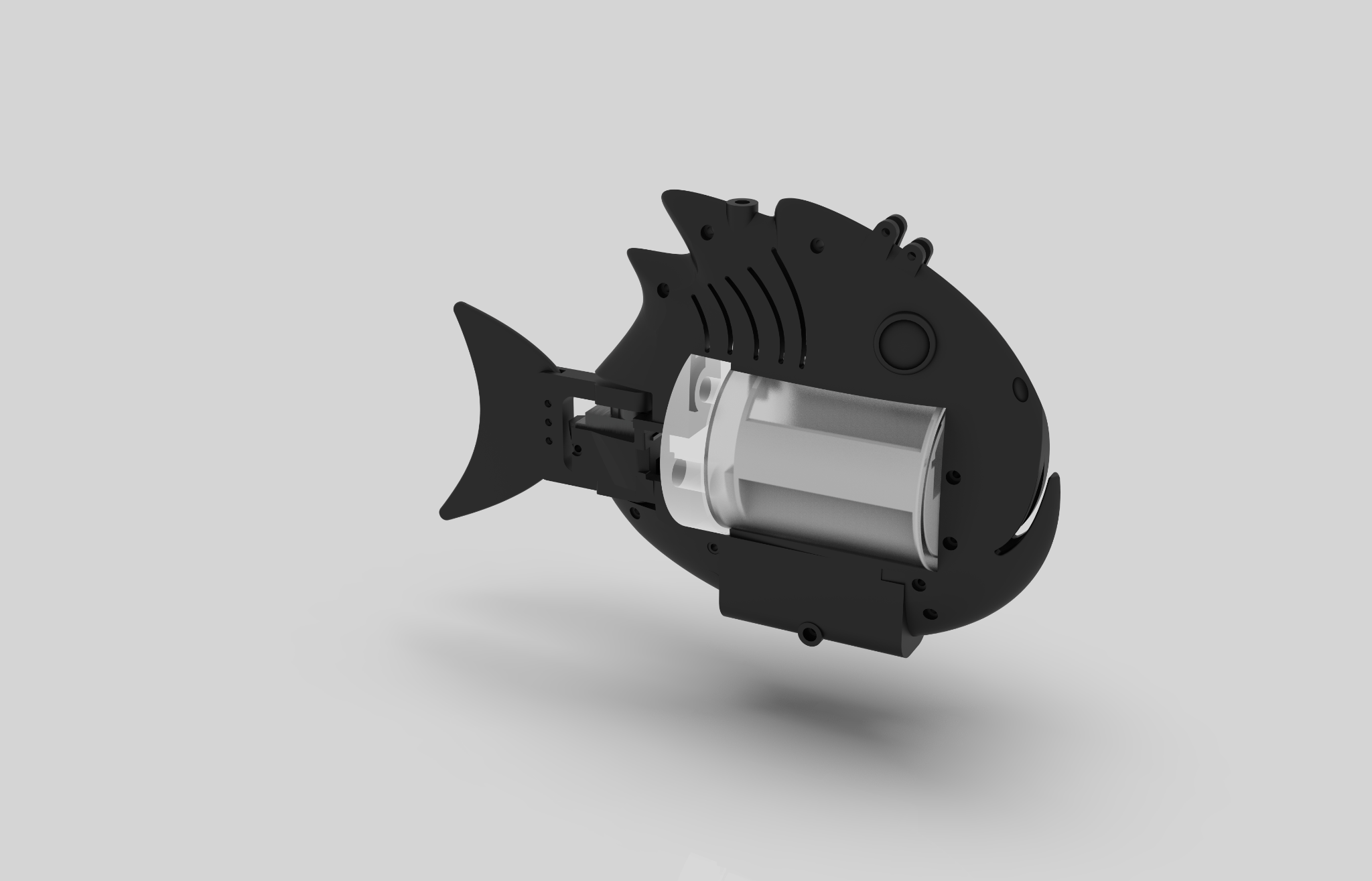
Black RoboFish EDU render
Protected core, refined formRobotics concepts presented through a clean, compact body.
L1 RoboFish EDU
Shell system

Two visual identities. One reusable core.

Different shell expressions make morphology and design iteration visible while preserving the same protected educational architecture.
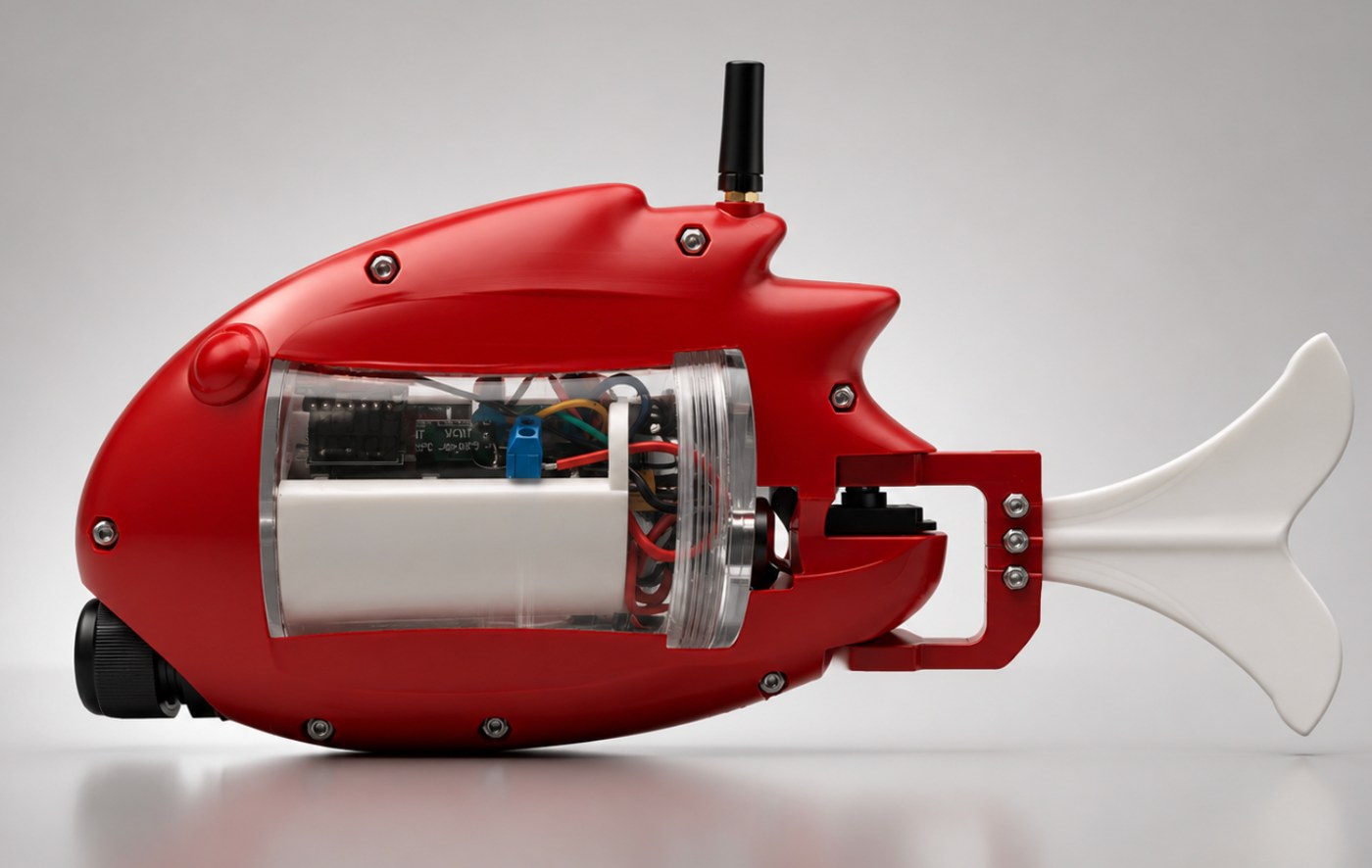
Red RoboFish EDU shell
Red shell variant — expressive and approachable for demonstrations and learning programs.
Black RoboFish EDU shell
Black shell variant — the same reusable core expressed through a more refined visual language.
Why L1 exists

The bridge from mechanics to intelligence.

RoboFish EDU is where the pathway becomes explicitly robotic. The product remains understandable, but now students can explore how a physical body senses, responds and communicates state.

01
Protected coreElectronics, power and basic sensing are organized in a clean, purposeful structure.
02
Morphology explorationShell and tail variations make form, efficiency and presentation discussable.
03
Variable motionDifferent speed settings create immediate opportunities for comparison.
04
Responsive behaviorLight input can be translated into action and visible feedback.
Red RoboFish EDU platform
A compact platform that keeps underwater robotics approachable while still feeling sophisticated.
Learning capabilities

What RoboFish EDU adds to the pathway.

From the outside it looks simple and elegant. Underneath, it opens the door to the essential logic of robotics, sensing and embodied behavior.

01

Modular structure

A protected core, tail-drive logic and shell-level variation create a clear system architecture.

02

Light sensing

Sensor input offers an intuitive introduction to perception and response.

03

Visible feedback

RGB output translates hidden system state into something learners can see immediately.

04

Water-based testing

Speed, direction and response can be explored in a real aquatic setting.

RoboFish EDU · Water demonstration
In water

See the platform behave—not just be described.

In the pool, RoboFish EDU becomes a compact embodied system that learners can watch, compare and reason about in real time.

That combination of clarity and motion makes it especially effective for robotics classes, STEM camps, public demonstrations and early engineering programs.

Intro roboticsSensor–responseFeedback visualization
Learning sequence

See. Test. Sense. Respond.

A focused sequence helps learners understand how robotic behavior emerges from body, control and environment.

01 · BODY

Inspect the architecture

Understand the protected core, tail drive and shell-level choices.

02 · MOTION

Test the swimming

Compare behavior across speed settings in real water.

03 · SENSING

Introduce the input

Connect light sensing with perception and control.

04 · FEEDBACK

Read the response

Use visible output to make system behavior understandable.

Next step

Move from entry robotics to advanced experimentation.

RoboFish Pro adds richer actuation and sensor-payload capability for higher-level programs and pilots.